
How AI image generators work
Many of today's image tools start from random noise and remove it step by step, guided by your text. The picture can look photographic and still be invented.
Sponsored placement
This space is available for an education-friendly sponsor. No advertiser is listed here yet, and nothing here is an endorsement.
Type a sentence, get a picture. Underneath, many of the best-known image generators are doing something less magical than it looks. They start from a field of random noise and, over many small steps, move that noise toward an image that fits your description. Researchers often call this a diffusion process. A widely cited 2022 paper by Rombach and colleagues describes latent diffusion, the family behind Stable Diffusion, and the Hugging Face Diffusers documentation walks through how such models are run in practice. Computerphile's video, below, gives a visual tour of the same idea, including Stable Diffusion and DALL·E.
Your text is not used as a filename in a photo library. It is turned into a representation that steers each denoising step. That is why a careful prompt — subject, setting, viewpoint, what to avoid — usually helps, and why the same prompt can still yield different pictures. Other methods exist, including systems that generate an image more directly, but the noise-to-picture story is the one you will meet most often in today's consumer tools.
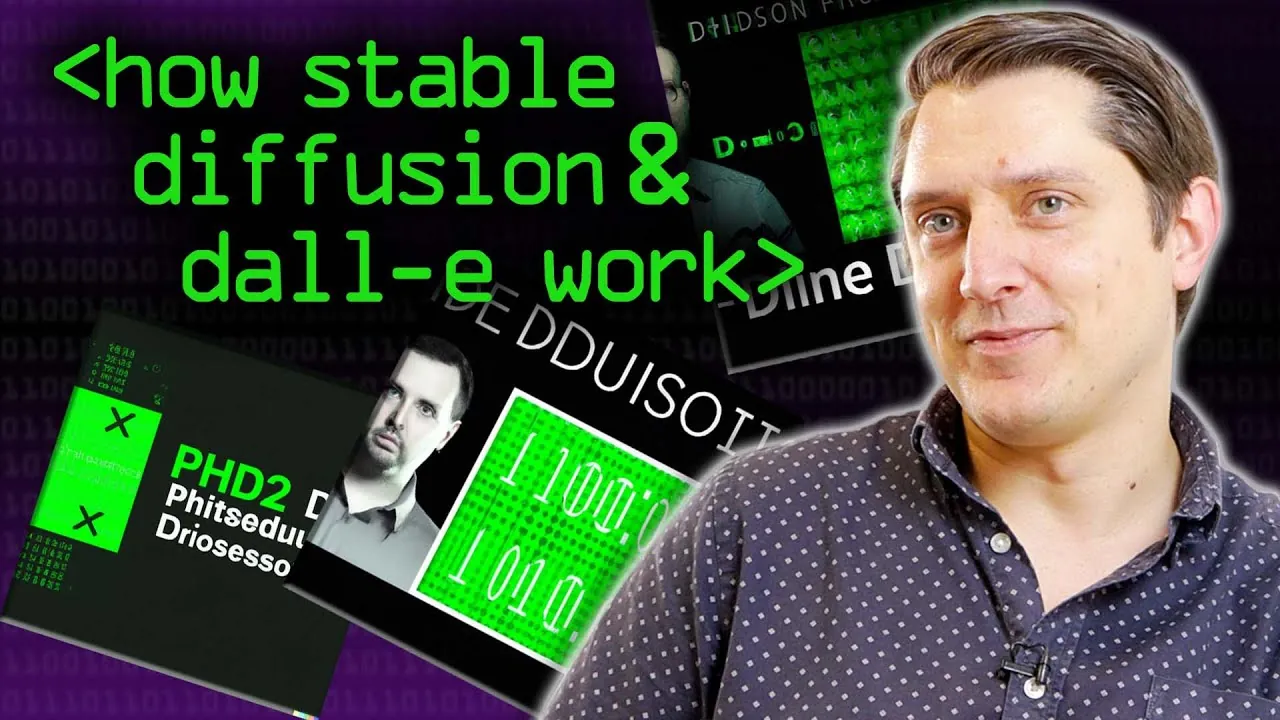
Because the model is synthesising a picture, it can invent details that were never photographed: a sixth finger, a warped logo, readable-looking text that says nothing, or a face that resembles someone real. Treat an AI image as an illustration until you have an independent reason to trust it, and be careful with anything that could pass for evidence. Our article on deepfake and voice-cloning scams covers the harm when a fake is used to impersonate a person.
How these tools are trained, and whether they may reproduce copyrighted styles or someone's likeness, is a live legal and policy question. Read the terms of the service you use before you publish a result, especially for commercial work. The Prompting Cheat Sheet on the shelf is written for text, but the same habit — be specific, then revise — applies to image prompts. An AI image prompt pack is also listed on the shelf.
How to judge an AI-generated picture
| Question | How to read it |
|---|---|
| Is the image retrieved from a folder of real photographs? | Usually not. Many modern image generators are diffusion systems: they start from noise and denoise toward a picture, steered by a text prompt. |
| Can a realistic picture still be false? | Yes. The result can look real and still invent faces, logos, text or events that never happened. |
| What should you read before you publish? | The tool’s terms. Training data and likeness rights are live policy questions. |
Sponsored placement
This space is available for an education-friendly sponsor. No advertiser is listed here yet, and nothing here is an endorsement.
What to remember
- Many modern image generators are diffusion systems: they start from noise and denoise toward a picture.
- A text prompt steers the process; it is not a search through a folder of finished photographs.
- The result can look real and still invent faces, logos, text or events that never happened.
- Training data and likeness rights are live policy questions: read a tool's terms before you publish.
Sources
Figures in this article come from the public sources above and may have changed since. Follow the links for the latest numbers.