Quantum computing in plain words
Quantum computers exist and are improving fast, but none has yet shown an independently confirmed practical advantage, and the big roadmaps point to 2028-2030.
Sponsored placement
This space is available for an education-friendly sponsor. No advertiser is listed here yet, and nothing here is an endorsement.
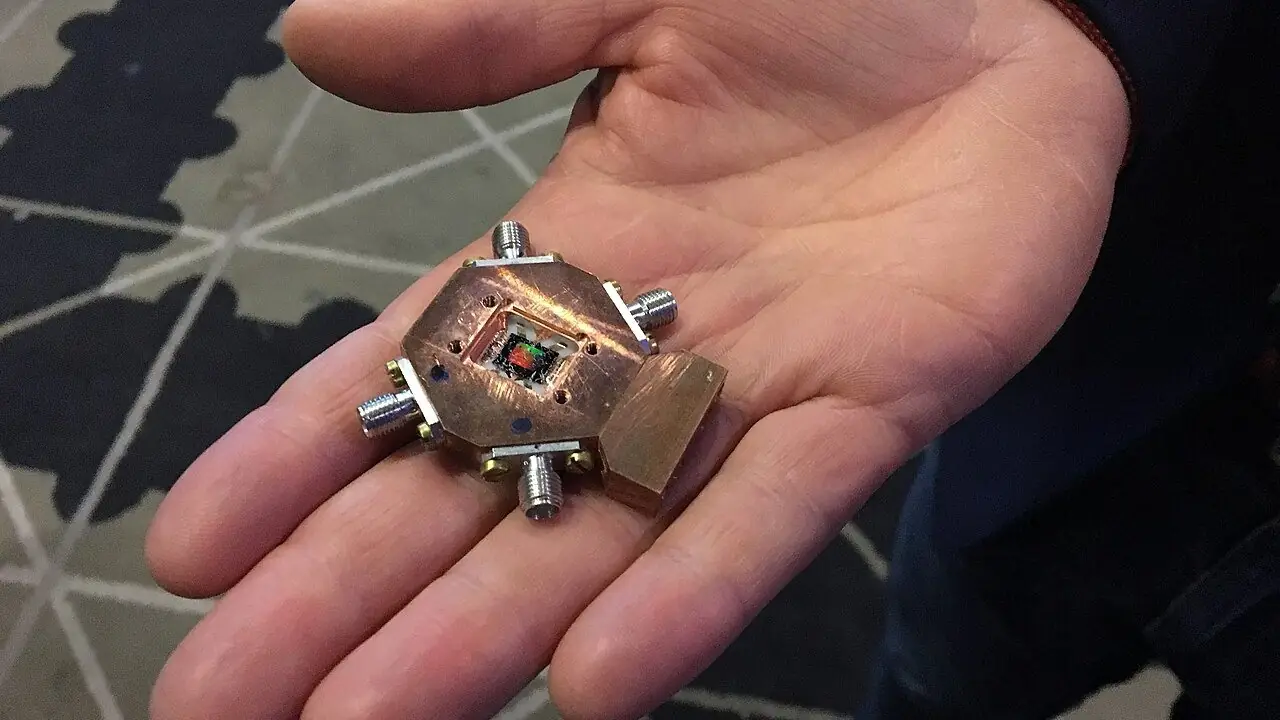
A normal computer stores information in bits that are either 0 or 1. A quantum computer uses qubits, which can be in a combination of both states and can be linked through entanglement. For certain problems, such as simulating molecules or factoring large numbers, this could allow calculations that ordinary computers cannot finish in any reasonable time. It is not a faster computer for everything: for most everyday tasks, quantum computers offer no benefit at all.
The main obstacle is error. Qubits are fragile and lose their information through tiny disturbances. The solution is quantum error correction, which combines many physical qubits into one more reliable logical qubit. In the last two years, Google's Willow chip, Quantinuum, QuEra and others have published results showing that error correction can work and improve with scale. But as of November 2026, no one has built a fault-tolerant machine large enough to run long, useful algorithms.

Claims of quantum advantage need care. Several experiments have shown quantum devices doing specific tasks faster than classical simulation, but many were designed as demonstrations, and some were later matched by improved classical methods. As reported, there is still no independently adjudicated case of a quantum computer solving a practical, commercially useful problem better than the best classical approach. Watch for the words 'logical qubit', which vendors define in different ways.
The industry's roadmaps cluster around the end of the decade. IBM targets a machine called Starling with about 200 logical qubits by 2029, Quantinuum targets its Apollo system in 2029, and QuEra and Alice & Bob have similar goals for 2028 to 2030. These are vendor targets, not guarantees. Meanwhile, anyone can try real quantum hardware today through free cloud tiers, such as IBM's Open Plan, which offers a few minutes of machine time per month, as reported.
A 2026 snapshot: what is here, and what is a target
| Question | How to read it |
|---|---|
| Is a fault-tolerant, practically advantageous machine here? | As of November 2026, this article reports no fault-tolerant quantum computer and no independently confirmed practical advantage. |
| What progress is already published? | Error correction has been demonstrated to improve with scale (for example Google’s Willow result in 2024). |
| How should you read vendor dates? | IBM’s Starling (~200 logical qubits by 2029), Quantinuum’s Apollo (2029), and QuEra and Alice & Bob (2028–2030) are vendor targets. IBM’s free Open Plan was reported to offer 10 minutes of QPU time per 28 days — check the current offer if you want to try hardware. |
Sponsored placement
This space is available for an education-friendly sponsor. No advertiser is listed here yet, and nothing here is an endorsement.
What to remember
- As of Nov 2026: no fault-tolerant quantum computer and no independently confirmed practical advantage (as reported).
- Error correction has been demonstrated to improve with scale (e.g. Google Willow, 2024).
- Vendor targets: IBM Starling ~200 logical qubits by 2029; Quantinuum Apollo 2029; QuEra and Alice & Bob 2028-2030.
- IBM's free Open Plan reportedly offers 10 minutes of QPU time per 28 days.
Sources
Figures in this article come from the public sources above and may have changed since. Follow the links for the latest numbers.