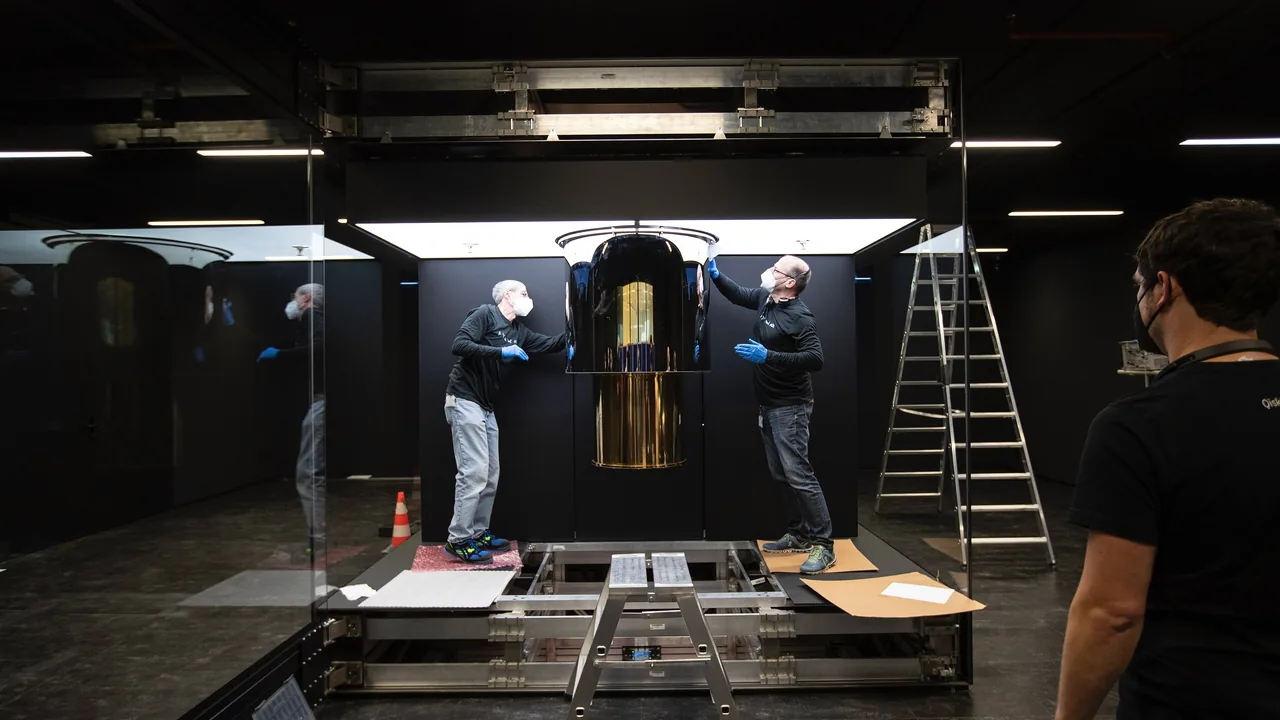
Quantum error correction in plain words
Qubits are fragile. Quantum error correction spreads one reliable logical qubit across many physical ones. Experiments have shown the idea can work; a large fault-tolerant machine is still a research goal.
Sponsored placement
This space is available for an education-friendly sponsor. No advertiser is listed here yet, and nothing here is an endorsement.
A qubit is a fragile thing. Heat, stray electromagnetic noise and imperfections in the hardware can all flip or blur the information it holds. Ordinary computers also have errors, but they can copy a bit to check it. Many quantum states cannot be copied in that straightforward way, so engineers use a different idea: quantum error correction.
The usual picture is that many physical qubits are used together to stand for one more reliable logical qubit. If a few of the physical qubits go wrong, measurements designed not to destroy the useful information can detect the fault and tell the system how to correct it. Building that into a machine that keeps working for a long calculation is one of the central problems in the field. Our plain-words guide to quantum computing sets the wider scene.

The idea is no longer only on a blackboard. In 2024, Google Quantum AI and colleagues reported in Nature that a surface-code experiment on the Willow chip could suppress errors as the code was made larger, crossing an important threshold. Google also published a companion video, embedded above, on demonstrating error correction. Other groups have reported related progress. These are scientific results, not a finished product you can book for a payroll run.
As of November 2026, as we noted in our article on the race to a useful quantum computer, no one has yet fielded a large fault-tolerant machine that independently demonstrates a practical advantage on an everyday commercial problem. When a headline says “error-corrected” or “logical qubit”, ask what was actually measured, and on how many qubits. The Quantum Headline Decoder Card on the shelf is a short list of those questions. For the overlapping hype around AI plus quantum, see real versus hype.
How to read an error-correction result
| Question | How to read it |
|---|---|
| Why is correction needed at all? | Physical qubits are noisy; a useful computation needs errors to be found and corrected. Error correction encodes one logical qubit in many physical qubits. |
| What has already been shown? | Google and others have published experiments, including in Nature in 2024, showing correction can improve as a code gets larger. |
| Does that mean a practical fault-tolerant machine is here? | As of November 2026, a large fault-tolerant machine for practical algorithms remains a goal, not an everyday tool. |
Sponsored placement
This space is available for an education-friendly sponsor. No advertiser is listed here yet, and nothing here is an endorsement.
What to remember
- Physical qubits are noisy; a useful computation needs errors to be found and corrected.
- Error correction encodes one logical qubit in many physical qubits.
- Google and others have published experiments, including in Nature in 2024, showing correction can improve as a code gets larger.
- As of November 2026, a large fault-tolerant machine for practical algorithms remains a goal, not an everyday tool.
Sources
Figures in this article come from the public sources above and may have changed since. Follow the links for the latest numbers.